




China is locking down a vast ring of airspace around Beijing. Starting Sept. 20, 2026, Chinese authorities will enforce what state and civil-aviation outlets call a “Capital No-Fly Zone” — a permanent special restricted area that, according to a Reuters review of an FAA-public NOTAM attributed to Beijing airspace control, stretches roughly 300 kilometers from […]
China is locking down a vast ring of airspace around Beijing.
Starting Sept. 20, 2026, Chinese authorities will enforce what state and civil-aviation outlets call a “Capital No-Fly Zone” — a permanent special restricted area that, according to a Reuters review of an FAA-public NOTAM attributed to Beijing airspace control, stretches roughly 300 kilometers from the capital in every direction. That is on the order of 600 kilometers across and more than 280,000 square kilometers — an Italy-sized footprint covering Beijing, Tianjin, large parts of Hebei, and slices of Inner Mongolia, Shanxi, Shandong, Liaoning, and the Bohai Sea.
The restriction runs from the surface to unlimited altitude. It is not a wartime closure of Chinese commercial aviation. Passenger airline flights are explicitly carved out. So are approved business aviation, military flights, customs, police, and fire-rescue operations. What gets squeezed is everything else: general aviation, sightseeing hops, unapproved low-altitude flying, and the gray zone of aircraft that are not scheduled airliners.
That distinction matters, because online claims have already outrun the paperwork.
What Beijing actually announced
Chinese state and civil-aviation messaging around Sept. 13 framed the move as capital-region airspace security, not a PLA exercise NOTAM and not a Taiwan-crisis flight ban.
CAAC News reported that China would designate a no-fly zone in and around the capital beginning Sept. 20, mainly restricting flight activity other than civil aviation flights and emergency rescue, and that the measure would not affect ordinary people taking airline trips.
Beijing Daily, as carried in English wire and regional reprints, put the purpose in blunt bureaucratic language: strengthen airspace security management in the capital region, maintain order in aerial operations, and protect important ground targets and public safety.
Reuters’ Sept. 17 reporting, citing the FAA-visible NOTAM, is what turned a still-vague state-media outline into a measurable map: permanent, multi-province, surface-to-unlimited, airline traffic continuing under rules that require exempt operators to fly with approved plans, continuous two-way radio, continuous electronic identification and tracking, and “security status” reporting before entry.
In other words: the sky over North China does not go dark for Air China or United. It goes hard for anyone who is not already inside the commercial and security system.
The crash that forced the zone
The political and regulatory trigger is not abstract.
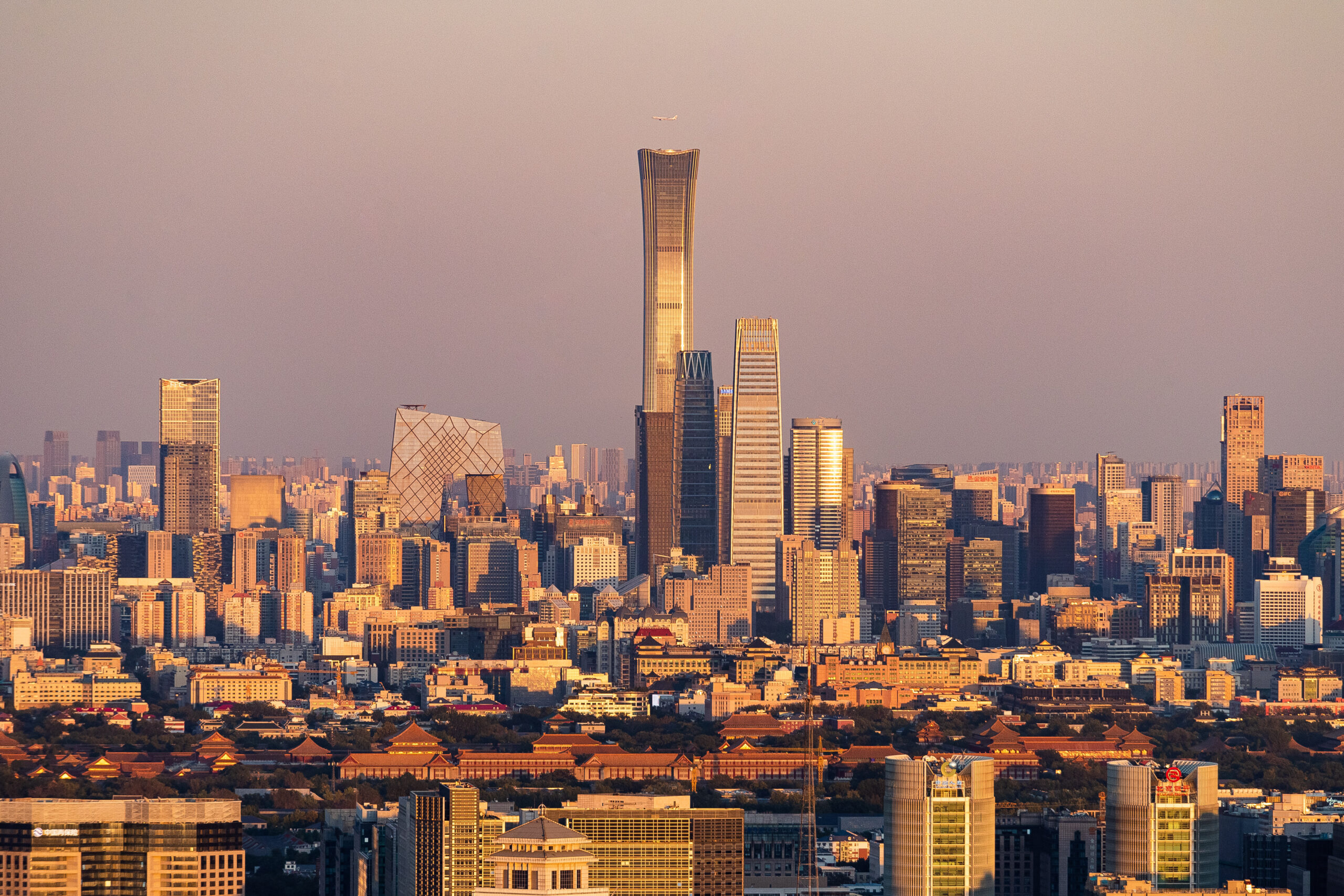
On June 26, 2026, a light-sport / general-aviation aircraft slammed into the 108-storey CITIC Tower — better known as China Zun — in Beijing’s central business district. The pilot was killed. Thirteen people were injured on the ground. Reporting around the incident described the aircraft leaving an approved area and losing contact. Authorities later cited diary material suggesting the pilot intended to end his life.
That crash punched through an assumption Beijing had lived with for years: that the real hard no-fly bubble was the tight political-core airspace where even airliners are kept out, and that everything else could be managed with ordinary controls. A light aircraft into the capital’s tallest tower made that assumption look negligent.
The Sept. 20 zone is the structural answer. It treats a multi-province radius as security-relevant terrain, not just a municipal flight rule.
The drone ban is related — and not the same story
Do not collapse two calendars into one claim.
On Sept. 11, 2026, the Standing Committee of the Beijing People’s Congress revised the municipal rules on unmanned aircraft. The text is blunt. The entire Beijing administrative region is designated controlled airspace for drones. Flying unmanned aircraft inside the city is banned. So is possessing, storing, or transporting drones and their core components, with limited assessed exceptions. That package takes effect Nov. 15, 2026.
That is a citywide possession-and-flight regime aimed at UAVs. The Sept. 20 Capital No-Fly Zone is a broader airspace restriction with airline exemptions and a footprint that spills far beyond Beijing’s city limits.
Both are security responses after the June tower crash. They are not interchangeable. Social posts that say “Beijing banned all drones and all flights on Sept. 20” are mashing two legal instruments and one rumor into a single false headline.
What this is not
Several viral frames fail on contact with the documents.
It is not a total ban on flights into or out of Beijing. Airlines continue.
It is not, on the available record, a Taiwan-invasion or wartime airspace shutdown. Chinese official framing ties the move to capital security after a domestic GA disaster, not to a cross-strait contingency.
It is not an ADIZ. China’s East China Sea Air Defense Identification Zone is a different legal and operational category — identification and intercept doctrine, not a blanket no-fly order. Conflating ADIZ with this NOTAM is category error.
It is not “just downtown Beijing.” The Reuters/NOTAM footprint is multi-province and sea-adjacent. Calling it a city-only ban understates the geography by an order of magnitude.
It is also not a recycle of the temporary airborne-object and drone restrictions around the Sept. 3, 2025 victory-parade window. Those were event TFRs. This is permanent.
A separate Bohai Sea navigation warning tied to drills around Sept. 18, 2026, is likewise adjacent noise, not the Capital No-Fly Zone itself.
Why it matters outside China
For U.S. and allied readers, the story is not “planes can’t land in Beijing.” The story is how a single spectacular failure in urban airspace security produced a permanent, Italy-scale restricted volume — and a follow-on citywide drone possession ban — with commercial aviation protected and everything informal crushed.
That pattern travels. After a high-visibility crash into a political and financial landmark, the state did not merely tighten a municipal drone ordinance. It redrew the map of who may legally occupy the sky across a capital region the size of a mid-sized European country, then layered a possession ban on top for unmanned systems inside the city proper.
Low-altitude industry operators, sightseeing operators, and anyone flying outside the airline-and-state exemption list now face a compliance wall. Airlines face process, not cancellation: plans, radios, tracking, and pre-entry security status for exempt categories that still need permission choreography.
For watchers of Chinese security policy, the signal is institutional: after China Zun, “capital airspace” means a continental-scale special restricted area, not a postcard over Tiananmen.
The bottom line
As of Sept. 17, 2026, the Capital No-Fly Zone is confirmed by Chinese civil-aviation messaging and by Reuters’ reading of the FAA-public NOTAM. Activation is Sept. 20. Airlines are exempt. General aviation and unapproved flying across a ~300 km radius are the target. Beijing’s separate drone possession and flight ban follows Nov. 15.
The tip that “Beijing has a no-fly zone” is true. The tip that “Beijing shut the airports” is not.